Plan for the first evening, not the perfect room
Moving into a rented room can come with a long shopping list. On the first night, a smaller question is more useful: can you get in, eat, wash, make the bed and get ready for tomorrow? Start with the things those activities need.
Keep the first-night bag with you or in an easy-to-reach place. Label it clearly and resist filling it with decorative items. The goal is to avoid opening every box to find a towel while your bedding is still in the car.
Check what is actually supplied
‘Furnished’ does not tell you the bed size, whether bedding is included or which kitchen items you may use. Ask for the details that affect packing. Check who will provide access, where to collect keys and what to do if your arrival time changes.
For a houseshare, ask which fridge, cupboard and bathroom storage spaces are yours. Confirm before borrowing food, utensils or toiletries. A friendly practical question now can prevent an awkward assumption later.
- What size is the bed, and which bedding do I need to bring?
- Are there curtains or blinds, and a working light in the room?
- Which kitchen equipment is available for shared use?
- Where should I store food, toiletries and cleaning items?
- Who should I contact if access or something in the room needs attention?
Your first-night bag checklist
Adapt this list to what you normally use. If you are travelling by public transport, carry the items you cannot easily replace first and decide which bulky basics can arrive separately.
| Job | Items to keep accessible |
|---|---|
| Make the bed | Correct-size sheet, pillow, pillowcase, duvet or blanket |
| Wash and get ready | Towel, toothbrush, toothpaste, soap and personal toiletries |
| Change and sleep | Nightwear, underwear and tomorrow’s clothes |
| Charge and contact | Phone charger, necessary cables and saved arrival details |
| Eat and drink | Water, an easy meal, breakfast and your required utensils |
| Leave tomorrow | Keys, bag, work or study essentials and any daily personal items |
Keep valuables, essential documents and any personal medication with you rather than in an unlabelled moving box.
Worked example: arriving after work with two bags
Imagine arriving at 19:00 with a backpack and a large holdall. The room has a bed but no bedding, and you have confirmed that a microwave and kettle are shared. You need to leave for work at 07:30 the next morning. This fictional plan prioritises access and a usable morning.
Put the charger, toiletries, clean clothes and tomorrow’s work items in the backpack. Put bedding at the top of the holdall. Choose food you can prepare with the equipment you know is available. Arrange any additional bulky items for a later trip instead of carrying things you will not use that evening.
| When | One useful action |
|---|---|
| On arrival | Confirm keys, access and your storage space |
| Before unpacking fully | Look over the room and note questions to raise |
| First setup | Make the bed and put the towel and toiletries within reach |
| After eating | Pack tomorrow’s bag and check the morning route |
| Before bed | Charge your phone and set aside keys and clothes |
Ask three small housemate questions
A full household meeting may be too much on moving evening. Start with immediate practical questions: ‘Which shelf can I use?’, ‘Is there anything I should know about the bathroom in the morning?’ and ‘What is the best way to ask about shared things?’
Save wider conversations about shared purchases, cleaning routines and schedules for a calmer moment. Write the questions down so you do not have to remember them while unpacking. If people give different answers, ask for clarity rather than silently choosing the version that suits you.
Buy the next thing you need, not everything you might need
After the first night, sort your list into already have, ask or borrow, and buy. Use the actual room to decide sizes and quantities. Storage boxes are easier to choose once you know the available shelf space; a full set of cookware may make little sense before you know what is shared.
A useful day-two list has a reason beside each item: ‘laundry bag because clothes currently have no place’ or ‘bedside light because the main light is out of reach’. That reason helps you decide what can wait.
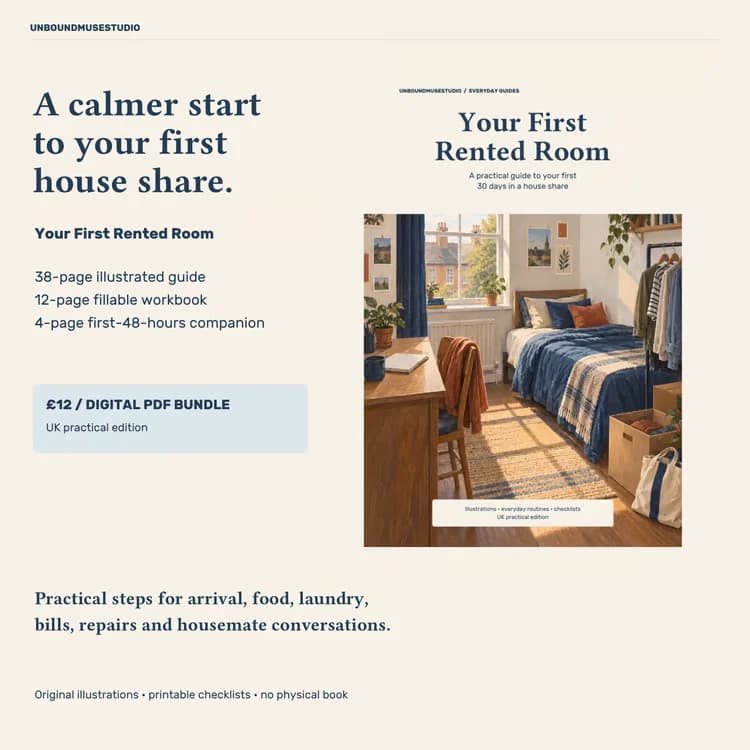
Our free First 48 Hours companion provides a printable arrival checklist. Your First Rented Room adds an illustrated guide and fillable workbook for the wider move. This article covers practical settling-in; use the guide’s official UK resource links for questions about housing rules.